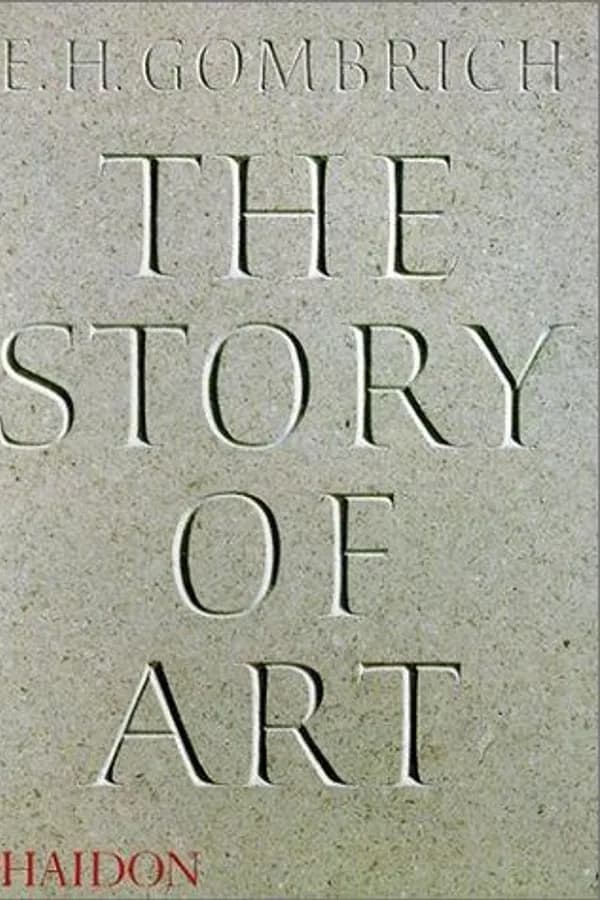
Book
The Story of Art
E. H. Gombrich
There is no Art, only artists: the whole Western tradition retold as concrete problems and their costly solutions, with every gain in one direction paid for in another.
- TYPE
- Book
- SHELF
- Art & Aesthetics
- TIME
- 14 min read
- ADDED
- 2026 · 07 · 07
- STATUS
- Completed
- IDEAS
Art · History
Why it matters
It is the map under everything I look at: the tradition as an archive of solved problems, which is the only way a working photographer can use six centuries of painting.
Gombrich opens by abolishing his own subject: there is no such thing as Art, only artists solving particular problems under particular demands. What follows retells the Western tradition as that chain of problems. Egyptian painters drew what they knew, building for permanence; Greek sculptors and painters learned to draw what they saw; medieval makers subordinated both to what images mean, painting scripture for the unlettered. Giotto staged sacred stories as witnessed events; the Renaissance conquered perspective, anatomy, and light, and immediately inherited the next problem, keeping fidelity to appearance from wrecking order, which Raphael's composition and Leonardo's deliberate blur were built to solve. The Reformation destroyed the altarpiece economy and pushed the Protestant North into portraits, genre scenes, and the invented market of Dutch specialization; the French Revolution broke the last settled frame of patron and task, and the nineteenth century became a permanent revolution that ended with Impressionism completing the conquest of appearance. Cézanne, Van Gogh, and Gauguin enter as three dissatisfactions with that completion, and the twentieth century as their consequences. Through it all runs one law: no progress, only trade; every solution opens the problem the next generation must live inside.
- There is no such thing as Art with a capital A; there are only makers answering particular demands with particular means, and the demands change more than the makers do.
- Egyptian, Greek, and medieval image-making differ in purpose before skill: drawing what you know, what you see, and what it means are three different disciplines, each coherent on its own terms.
- Every stylistic revolution solves a problem the previous solution created; there is no progress in art, only exchange, and each acquisition carries a price the next generation pays.
- The conquest of appearances was a program with an end: when Impressionism completed it, painting inherited the crisis of having nothing left to conquer and no settled task to serve.
- The Reformation and the collapse of patronage forced painters to invent the market, the specialty, and the self-conscious style; the modern artist's freedom began as unemployment.
- Cézanne, Van Gogh, and Gauguin are three exact dissatisfactions with Impressionism, and most of the twentieth century is those three worked out at scale.
- Judge a work by the problem its maker faced, not by the standards of a later solution; most bad criticism is anachronism wearing the costume of taste.
The argument
The opening move abolishes the subject. There is no Art, Gombrich says; there are only artists, and the capital letter has become a phantom that frightens people into reverence or rebellion before they have looked at anything. What exists concretely is men making things for purposes: a tomb image to serve the dead, an altarpiece to serve a liturgy, a portrait to serve a marriage negotiation, a poster to serve a sale. Written so that a teenager can follow it, which is a discipline and not a concession, the book then performs its single method a hundred times: put yourself in the maker’s situation, reconstruct the task and the means available, and judge the work as an answer. Everything the book despises, and its courtesy conceals real contempt, follows from the method: genius-worship, period mysticism, the explanation of pictures by the spirit of an age rather than by the demands of a job.
The early chapters establish the book’s deepest triad. The Egyptian painter drew what he knew: each thing from its most characteristic angle, the pond from above and the fish from the side, because the image was equipment for eternity and clarity outranked appearance. The Greek workshops, over a few generations, began correcting inherited formulas against what the eye actually reports, and Gombrich pauses over a painted foot seen from the front on a vase from around 500 BC as a genuine revolution: the first time, on his account, that a maker deferred to a viewpoint rather than to knowledge. The medieval centuries then look like decline only to a reader who assumes appearance was still the goal. It was not: the task had changed again, to showing what sacred things mean, and Gombrich retells the old dictum that pictures serve the unlettered as writing serves readers. Three purposes, three disciplines: what you know, what you see, what it means. Most of the confusions of criticism, then and now, come from grading one discipline by the rules of another.
From Giotto forward the book follows the long program it calls the conquest of appearance. Giotto’s innovation is staged witness: the sacred story happening before you, figures with weight, grief you can read in a back. Brunelleschi’s perspective and Masaccio’s application of it give the stage a geometry; Van Eyck, in the North, pushes oil to a fidelity of surface that still embarrasses photography. And then the book makes its most instructive turn: mastery creates the next crisis. Once painters could render what they saw, pictures threatened to fall apart into accurate fragments, and the sixteenth century’s problem was order regained without truth surrendered. Leonardo’s sfumato is presented as an engineered solution, the deliberate blur that lets a face live by leaving it slightly unresolved; Raphael’s compositions solve the problem of arranging natural figures into designs that look inevitable rather than posed; Michelangelo solves the body so completely that a generation is crushed by the solution. The Venetians shift the problem to color and light. Dürer carries the whole program north. At every step Gombrich keeps the ledger: what this generation gained, what it could no longer do innocently.
Then history intervenes in the economics. The Reformation, suspicious of images, ends the altarpiece market across the Protestant North, and painting there survives by narrowing: portraits, genre scenes, still life, the specialties of seventeenth-century Holland, where pictures were made for open sale rather than commission. Gombrich is unsentimental about what this means: the modern condition of art, work made on speculation for unknown buyers, is not a liberation that artists chose but an economy they were pushed into, and Rembrandt, its greatest figure, was made and then broken inside it. The Baroque South runs the opposite experiment, Caravaggio’s insistence on sacred scenes cast with people from the street, Rubens’s factory of vitality, Velázquez painting air. By the eighteenth century the tradition is a set of settled manners taught by academies, and then the second great break arrives with the age of revolution: the frame of patron, task, and workshop training gives way, and style itself becomes a matter of choice. An architect now chooses between revivals; a painter chooses a manner the way a man chooses a party. Gombrich treats this as the birth of the modern artist: free, self-conscious, and obliged to supply from inside himself the conviction the old tasks used to supply from outside.
The nineteenth century he describes as permanent revolution: the academy and the Salon on one side, the successive rebellions on the other, each scandal becoming the next orthodoxy. Photography removes the trade in likeness; Japanese prints show that Western perspective is a choice, not a law; and Impressionism completes the old program at last, appearance conquered all the way down to the flicker of light on a Sunday crowd. The completion is the crisis. Gombrich then builds the cleanest structure in the book: three painters, three dissatisfactions. Cézanne finds Impressionism’s shimmer bought at the price of order and spends his life trying to recover solidity without giving back the brightness; Van Gogh finds it emotionally mute and forces color and stroke to carry inner states; Gauguin finds it civilized to the point of exhaustion and goes looking for directness elsewhere. Cubism, Expressionism, and Primitivism are those three dissatisfactions worked out at scale, and the twentieth century’s experiments, whatever their manifestos claim, are read as searches for a task equal to the freedom. The book refuses to end with a verdict on them. The story, it insists, has no plot conclusion, because it was never the story of progress; it is a relay of problems, and there is always a next leg.
Working notes
The idea I use most is the one the book demonstrates rather than announces: no maker starts from the eye alone. Every artist inherits a schema, a formula for a face or a tree or a frame, and corrects it against the world; the correction, not the formula and not the world, is where the work happens. I recognize the mechanism everywhere I have ever built anything. A photographer shoots the pictures he has already seen until the subject forces a correction; a trader inherits a model of the market and pays tuition for every adjustment; the schema is what makes seeing possible and the schema is what seeing must overcome. Gombrich taught me to stop being ashamed of the inheritance and to start being deliberate about the corrections.
He and Berger make a matched pair on this shelf, and the order matters. Gombrich gives the tradition’s inner logic, problems and solutions; Berger gives its ownership structure, who paid and what the paying bought. Read Berger first and you acquire a critique with nothing under it, a knife and no meal. Read Gombrich first and Berger arrives as a correction instead of a creed. Both describe the same six centuries; neither description survives alone, which is roughly how I hold every pair of strong books in this archive.
The book also changed what a museum is for. I used to walk galleries chronologically and absorb; now I go in with one problem, edge control, light falling on stone, how to keep a symmetrical facade from going dead, and follow that problem across rooms and centuries, watching different hands solve it under different constraints. A museum read Gombrich’s way is an engineering archive with the documentation written in paint. The habit has made me a worse tourist and a better editor.
And the doctrine of no progress is a vaccine I did not know I needed. The industries I work in run on chronological snobbery: newest model, newest stack, newest style, each assumed better because later. Gombrich’s ledger says otherwise: every gain is an exchange, and the honest question is always what was traded away. The Egyptians could not do foreshortening; nothing since has matched their clarity of statement. When I catch myself assuming the new tool obsoletes the old discipline, I reread the early chapters and count what the conquest of appearance cost the conquerors. The count is never zero. It never is in software either.
His prose deserves a note of its own: long thoughts in short words, authority without decoration, the assumption that clarity is a courtesy owed to the reader rather than a simplification inflicted on the subject. The book is proof that a scholar can carry a century of learning without making the reader carry it too. I hold my own working documents against that standard and usually lose.
Where I push back
The single road is the problem. Egypt to Greece to Rome to Florence to Paris: the story’s shape makes every other tradition a tributary or a detour, China and Islam glanced at, the entire art of half the world treated as prologue to the West’s plot. And the book is womanless to a degree that reads, now, as a finding about the tradition and the historian at once. Gombrich would answer that he told the story of one tradition honestly, and he did; but the book’s serene voice makes its borders feel like the borders of art itself, and a reader who takes the spine for the skeleton inherits the exclusions as facts of nature. The clarity that makes the book great is exactly what makes its silences load-bearing.
There is also a survivorship problem the method hides. A history of problems and solutions is written backward from the solutions that won; the chains of cause look inevitable because the failed branches were pruned before the narrating began. Gombrich distrusts teleology and then draws a road map that reads like destiny. The same man warned against explaining art by the spirit of the age; explaining it as a relay of necessary problems is a gentler determinism, but it is determinism, and it flatters hindsight.
And the machine runs thin exactly where the reader most needs traction: the twentieth century. Problem-and-solution explains Cubism handsomely and then begins to sputter, because once the task dissolves, the framework has nothing to grip; his patience with abstraction is visibly rationed, and the book’s composure starts to read as distance. The framework also converts objects of terror and worship into design exercises a shade too smoothly. An idol was not a solution to a formal problem; it was a god. Gombrich knows this and says so, and the narrative machinery digests the knowledge and rolls on.
How it enters the work
The problem-reconstruction habit now runs in front of my own camera. Before a Fineara series begins I write the problem down as one sentence, the way Gombrich would state it for a dead painter: how to hold a glass tower’s repetition without monotony; how to make harbor water read as mass rather than surface; how to keep symmetry from embalming a facade. A series with no stated problem is decoration in progress, and I have learned to abandon those early. When the galleries ask what a body of work is about, I answer with the problem, not the mood, and the conversations have been better ever since.
The raiding is literal. Dutch painters solved interior light falling across plaster four hundred years before I metered it; the Baroque solved the theatrical shadow; the Egyptians solved emblematic clarity, the exact frontal statement my architectural work keeps reaching for. Black-and-white long exposure is a young medium with an old problem set, and Gombrich’s book is the index that tells me which century to burgle for which solution. Studying the tradition this way is not homage; it is not even influence; it is engineering reuse across a gap of centuries, and it works.
The ledger discipline transferred too. Every technical gain in my craft now gets costed before adoption. More dynamic range flattens drama; more sharpness kills air; the long exposure itself buys form by selling information, and the purchase is only worth it when form was the point. Naming the trade before making it is Gombrich’s habit applied at the tripod, and it has vetoed more gear than any budget ever did.
And underneath all of it, the book built the taste I trust. I went through the tradition in order, once, deliberately, the way the book insists, and the chronology did what no feed of curated images had done: it taught me why things look the way they look, which is the only ground judgment can stand on. Preference is what you like; taste is knowing what the maker was up against. The first is free. The second cost six centuries, compressed by one Viennese scholar into a book a teenager can read.
- Reconstruct the problem before judging the solution; the verdict may not change, but it becomes earned.
- Raid the tradition deliberately: somewhere in six centuries of picture-making, your current formal problem has already been solved.
- Name the cost of every gain before adopting it; a sharper tool always buys something and always sells something.
- Distrust any account of art, or of work, that never mentions a task, a patron, or a constraint.
- Build taste chronologically at least once; feeds teach preference, history teaches judgment.
It is one story, Western, male, and shaped like a single road from Egypt to Paris, and the book's serene clarity makes the exclusions easy to inherit without noticing: no women to speak of, the rest of the world treated as vestibule. The problem-and-solution machinery also runs thin where images were instruments of worship, terror, or power rather than pictorial tasks. Use it as a spine and it will hold your looking for decades; mistake it for the whole skeleton and your seeing keeps its borders.