Book
The Golden Bough
James George Frazer
A rationalist set out to explain one murderous priesthood and assembled, instead, the pattern under half of human religion: the god who must die so that life continues.
- TYPE
- Book
- SHELF
- Esoteric & Symbolic
- TIME
- 16 min read
- ADDED
- 2026 · 07 · 07
- STATUS
- Completed
- IDEAS
Esoterica · History · Psychology
Why it matters
It is the quarry every later book on this shelf mines; Campbell, Eliade, and Jung are refinements of material Frazer hauled out of the ground first.
Frazer begins with a rule so strange it demands a theory: at Nemi, in the grove of Diana, a priesthood passed by combat, the incumbent pacing his tree with drawn sword until a challenger plucked the sacred bough and killed him. To explain one Roman survival he surveys the ritual practice of the world, and the survey becomes the argument. Magic operates by two laws, similarity and contact, a coherent but mistaken physics of the mind. Kings began as magicians and became gods, held responsible for rain and harvest, hedged with taboo, and killed at the first sign of failing strength so the divine life in them could pass on undiminished. Behind the great cults of Adonis, Attis, and Osiris stands the vegetation cycle personified: the god dies with the seed and returns with it. The scapegoat carries the community's evils; the external soul hides a life outside its body; Balder falls to the mistletoe that held his; and the golden bough turns out to be that same growth on the sacred oak. The chain of argument is dead as anthropology. The images have outlived their refutation, which is the book's deepest lesson about how minds actually work.
- Sympathetic magic runs on two laws, similarity and contact: like produces like, and things once joined act on each other forever. Frazer calls it mistaken science, and its logic still runs wherever minds meet uncertainty.
- His grand scheme moves humanity from magic through religion to science: from manipulating impersonal law, to propitiating wills, to law again with better method. The ladder is Victorian, and it flatters the man standing at the top.
- Divine kingship makes the ruler a container of the god: responsible for the weather, fenced by taboo, and killed at the first sign of decay so the indwelling life transfers at full strength.
- The dying and reviving god personifies vegetation: Adonis, Attis, and Osiris die with the seed and return with the shoot, and the pattern shadows a fourth name the book never speaks loudly.
- The scapegoat is transference made civic: evil treated as a load that can be shifted onto a beast, a man, or a god, and driven out of town on schedule.
- The external soul deposits a life outside its body for safekeeping, and it closes the book's circle: Balder's life hid in the mistletoe, and the golden bough is the oak's own soul in a challenger's hand.
- The comparative method is both the engine and the flaw: rites stripped from their contexts will always confirm the pattern they were selected to illustrate.
The argument
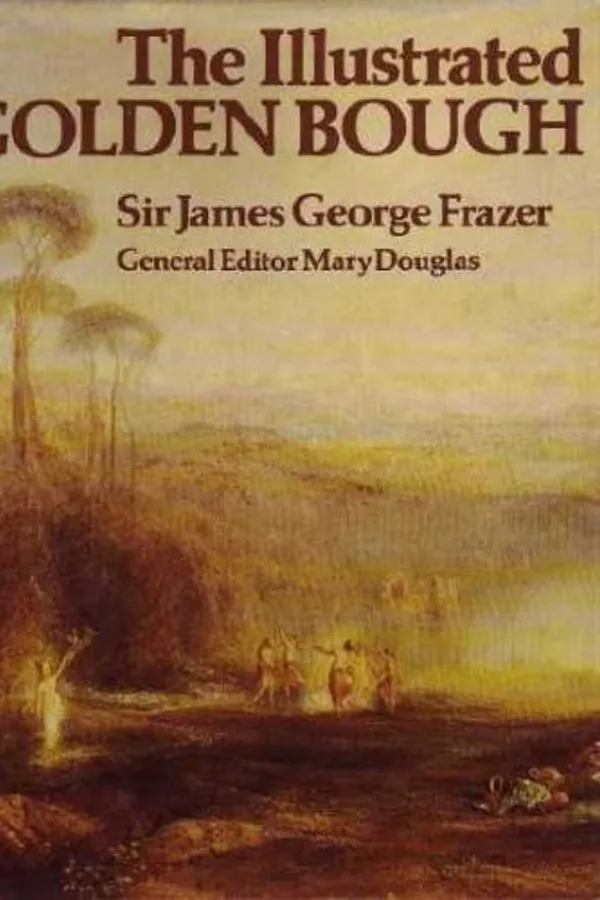
The book opens on a picture: Turner’s painting of Lake Nemi, the small volcanic lake south of Rome that the ancients called Diana’s Mirror, and above it, in the woodland, a rite that Roman writers mention the way a man mentions a thing he would rather not look at directly. The sanctuary of Diana at Aricia was served by a priest who bore the title King of the Wood, and the office had one rule of succession. A candidate, in the record usually a runaway slave, had first to break a bough from a certain tree in the grove; that entitled him to fight the reigning priest; if he killed him, he held the priesthood until a stronger man plucked the branch and killed him in turn. The incumbent’s whole tenure was a watch: circling his tree, sword drawn, waiting. Frazer’s question is a scholar’s question in the old style: what chain of ideas could ever have made this arrangement reasonable to the people who kept it?
His method is the book. Rather than read the rite in its Latin context, he reads it against everything: harvest customs collected by European folklorists, reports from missionaries and colonial officers across Africa, Asia, and the Pacific, classical texts, medieval chronicles. Two questions, why the priest must kill his predecessor and why the bough must be plucked first, expand across editions until the third runs to twelve volumes; the single-volume abridgment of 1922 is the book most readers have actually held. The wager underneath is stated early and carries everything: the human mind works essentially alike everywhere, so a custom from anywhere may explain a custom from anywhere else. All that the book achieves, and all that is wrong with it, follows from that wager.
The theoretical ground floor is the analysis of magic. Sympathetic magic works by two laws. The law of similarity: like produces like, so the sorcerer wounds a man through his image and the farmer prompts the rain by pouring water. The law of contact: things once conjoined act on one another at any distance, so hair, nail parings, and footprints remain live channels to their owner. Frazer’s judgment is exact and double. Magic is false science, a systematic misapplication of the association of ideas; and it is genuinely systematic, an implicit faith in impersonal law running through the whole of nature. The magician is closer kin to the scientist than the priest is; both assume a universe of causes that can be worked. On this he builds his famous staircase: an age of magic, which fails; an age of religion, which abandons law to propitiate divine wills; an age of science, which returns to law with better method. He presents the sequence as the natural history of thought. It reads better as the self-portrait of a Cambridge rationalist arranging mankind on the steps below his own chair.
On that floor stands the theory of the divine king. Kings, Frazer argues, descend from magicians: the man credited with making rain becomes the man responsible for it. In the strong form the king is a god-man, an incarnation of the life of the land; his vigor and the harvest are one system, and his decay is therefore a public emergency. The logic that follows is the book’s cold center. If the god dwells in the king, the god ages as the king ages, and the only way to preserve the divine life is to transfer it while it is still strong, which means killing the king at the first sign of failure, or after a fixed term, before nature can do it slowly. The taboos that smother sacred kings, the rules about food, gaze, and touching the ground, are not honors but insulation around a dangerous charge. The priest at Nemi, king in title and killed by his successor, begins to look like a preserved specimen of the type.
The middle of the work turns to the great dying gods of the eastern Mediterranean: Adonis mourned annually, Attis and his pine, Osiris dismembered and reassembled, Dionysus torn and reborn. Frazer reads them all as vegetation personified: the god dies with the seed and rises with the shoot, and the rites of mourning and rejoicing are the agricultural year performed. Then he does something quietly devastating: he finds the same figure alive in the fields of Christian Europe, in harvest dolls, corn spirits, the ceremonies around the last sheaf. The pattern is not exotic; it is the substrate. And a Victorian reader, following dying and reviving gods through their springtime festivals, could hear a fourth name without Frazer pronouncing it. In one edition he applied the argument to the crucifixion directly; afterward he withdrew the passage to the back of the work. The architecture kept saying what the sentence no longer did.
Two further structures complete the machine. The scapegoat generalizes transference: evil conceived as a load that can be shifted onto beasts, men, effigies, or gods, and expelled on schedule, the community cleansed by export. And the external soul: the worldwide tale of the life hidden outside the body, in an egg, a bird, a tree, so that the owner cannot be killed until the hiding place is found. This is the key that closes the circle. Balder, the shining Norse god, invulnerable to everything except mistletoe, dies by the one growth that held his life. The mistletoe lives on the oak without rooting in the earth, green when the tree stands bare: a visible soul that never touches the ground. Frazer’s conclusion: the golden bough of Nemi was the mistletoe, the external soul of the sacred oak and of the priest who embodied it, which is why the challenger had to pluck it before he could kill. The rule of the grove was never madness; it was theology, worked out to its last consequence.
Whether any of this is true is another matter, and the discipline Frazer helped found spent the next generation deciding that it mostly is not. But the book’s effect never ran through anthropology. It ran through literature and the general imagination: Eliot cited it in the notes to The Waste Land, the ritual reading of myth spread through a generation of classicists, and the figure of the dying king entered the century’s bloodstream. The Golden Bough set out to explain a rite and ended as one: a vast, ordered descent toward a killing in a grove, conducted in the calmest prose in English scholarship.
Working notes
The book is a specimen of what it studies. Frazer, who believed none of it, built a twelve-volume labyrinth with a sacred murder at the center and a bough at the entrance, and generations of readers have walked it as an initiation while telling themselves they were reading anthropology. The rationalist performed the rite he explained. I take that seriously rather than ironically: it shows that the pattern does not need belief to organize a mind. It organized his.
On this shelf Frazer is the quarry and the control group at once. Campbell schematizes his material into the monomyth; Eliade re-sacralizes it; Jung interiorizes it; Peterson re-armors it. Read the downstream books first, as I did, and Frazer arrives as a shock: the raw mass before the smoothing, with the blood still in it. The lesson generalizes. Whenever a shelf has a warehouse book, read the warehouse, because the systematizers chose from it, and their choices are the most instructive thing about them.
The two laws of magic are the most durable equipment in the book, and their afterlife is not in the past tense. Similarity and contagion run wherever minds are untrained and stakes are high: the trader who will not alter the incidental details of a profitable routine, relics of the famous priced as contact channels, brands built purely on the law of similarity, whole markets moved by resemblance to a prior chart. Frazer thought he was cataloguing the primitive mind. He was cataloguing the permanent one, visible whenever fear or greed thins the modern varnish. I have watched sympathetic magic operate on desks staffed entirely by engineers. Nobody called it that. That is the varnish.
The divine king chapters read differently after you have watched organizations age. The founder who is the company; the taboos that accumulate around him; the dread of naming decay; the fact that nobody inside the system can say aloud that the strength is failing. Frazer’s ancients killed the king at the first grey hair, and the modern corporation, which believes itself their superior, lets the god rot in office because the succession rite is missing. I do not endorse the spear. I notice that the problem it solved remains unsolved.
Wittgenstein’s objection sits in my margin and will not leave: ritual is not failed science but expression, and the man who burns an effigy may be doing something closer to poetry than to error. The reframing does not demolish Frazer; it demotes him, from physicist of ritual to its lexicographer. A lexicon this size is still wealth.
The deepest thing the book did to its first readers was structural: it placed the unique inside a series. Once the resurrection stands in a table beside Adonis and Osiris, it can be defended, believed, even preferred, but it cannot again be alone; seriality is irreversible. Frazer understood this, which is why the explicit argument could retreat to an appendix without weakening the implicit one. Arrangement is the strongest form of assertion, because it cannot be quoted against you.
And a note on the prose, because the prose is the delivery system. The even, faintly ironical calm, example after example, is itself the argument: nothing is sacred to the method because everything is material for it. The accumulation persuades below the level of logic; by the fourth hundred page the reader accepts the pattern because he has been walked past it a thousand times. That is rhetoric, not proof. It worked on an entire century, which is worth remembering whenever a modern book attempts the same trick with data instead of harvest customs.
Where I push back
The method is indefensible, and not merely dated. Frazer never saw the peoples he explained; his data arrived through questionnaires answered by missionaries, traders, and colonial officers, men with interests, and every practice reached him already cut from the context that gave it sense. The comparative method as he ran it cannot fail: select worldwide for whatever resembles your pattern and the world will return your pattern, enriched. The evolutionary ladder, magic to religion to science, is not a finding but a premise, and it files living peoples as fossils of the reader’s own past, a condescension that is structural rather than a lapse of tone. Anthropology was right to bury it, and the burial was conducted by fieldworkers Frazer himself had inspired into the discipline, which is the kindest thing the record says about him.
Wittgenstein’s cut goes deeper than the fieldworkers’ did. Treating rite as mistaken hypothesis assumes the celebrant is a failed engineer, when the rain dance may stand to the rain as the funeral stands to death: not a lever but an utterance. Frazer’s intellectualism cannot see expression; everything must be a theory, because theory was all its author had. His savages are Cambridge dons who happen to be wrong.
Even the founding rite is thin. The priesthood of Nemi enters the record in a handful of brief classical references, and the reconstruction that opens the book is already partly built from the comparative material it is supposed to anchor. There is a real possibility that the most influential explanation in the history of religious studies is an immense answer to a half-attested question.
And the pattern intoxicates. Once you hold the dying god you see him in every myth, every harvest, every succession crisis, and the seeing feels like discovery while it is mostly the law of similarity, the very mechanism Frazer diagnosed, running on his own readers. Nothing in twelve volumes could have falsified the thesis; what killed it as science preserved it as literature. A reader who does not know which of the two he is holding will be confidently wrong about the past in exact proportion to how moved he is. Take the images; audit the chain that delivered them; and never confuse being moved with being informed.
How it enters the work
Frazer is the skeptical instrument on this shelf, and I keep him sharpened on purpose. The inquiry these books record runs on symbols, correspondences, and initiatory texts, all of which reward assent, and Frazer supplies the counter-pressure: before a symbol is accepted as revelation, it must pass his questions. Where else does this appear; what mechanism carries it; what would the pattern look like if it were merely human. Half of what reaches this shelf fails those questions and gets filed as anthropology rather than as counsel. The other half survives with its claims cut back and its exercises intact, which is the only condition under which I trust them. A serious inquiry needs one resident unbeliever. Mine is Frazer.
The photography took something subtler from him. Frazer’s deepest habit is to see the present as a surface under which older forms persist: the corn spirit under the harvest festival, the king under the priest, the grove under the garden. That habit transferred whole into the architectural work. A lighthouse is a watch kept at a boundary; the Oculus is a built cosmology whether its engineers would say so or not; and the long exposures do with time what Frazer’s method does with custom: strip away the moving surface, the traffic and weather of the present, until the persisting form stands alone. The black-and-white instinct is the same operation again, the modern color removed so the older structure shows. I photographed this way before reading Frazer. After him I knew what the pictures were: records of survivals.
And the grove itself became working equipment for the interior life. The image of the watcher who holds an office by strength he knows must fail, circling a tree that holds his life, reads at night like a portrait of every man who has built something and knows the challenger is already in the wood. Frazer meant it as a puzzle in the history of religion. The inquiry the rest of this shelf conducts, through Tomberg’s exercises and Jung’s psychology, is partly an attempt to hold that office differently: to stop being the priest whose whole life hangs in the bough. That is not anthropology, and Frazer would not sign it. His book handed me the image anyway, which confirms the one finding of his I trust completely: the images are stronger than the arguments that carry them, and they go where they will.
- Distrust the theory that explains everything; ask what it had to cut from context to make the fit.
- The two laws of magic still govern untrained minds: watch for similarity and contagion reasoning in markets, in brands, and in your own superstitions.
- Institutions inherit the divine king problem: renew authority before it decays, or the succession will be violent.
- Read refuted books for their questions; a great question outlives every wrong answer given to it.
- Images outlast arguments; whoever supplies the image holds the longer lease on the mind.
The anthropology is dead and deserved to die: armchair method, colonial informants, practices sheared from context and stacked into an evolutionary ladder with Victorian Cambridge at its summit. Almost any specific ethnographic claim in it should be distrusted until independently confirmed. Read it as literature, as a history of the questions, and as a specimen of the pattern-hungry mind studying itself; and watch the intoxication, because once you hold the dying god you will see him everywhere, which is a fact about you and not about the data.